The Bridge Between Pedagogical Knowledge & Content Knowledge
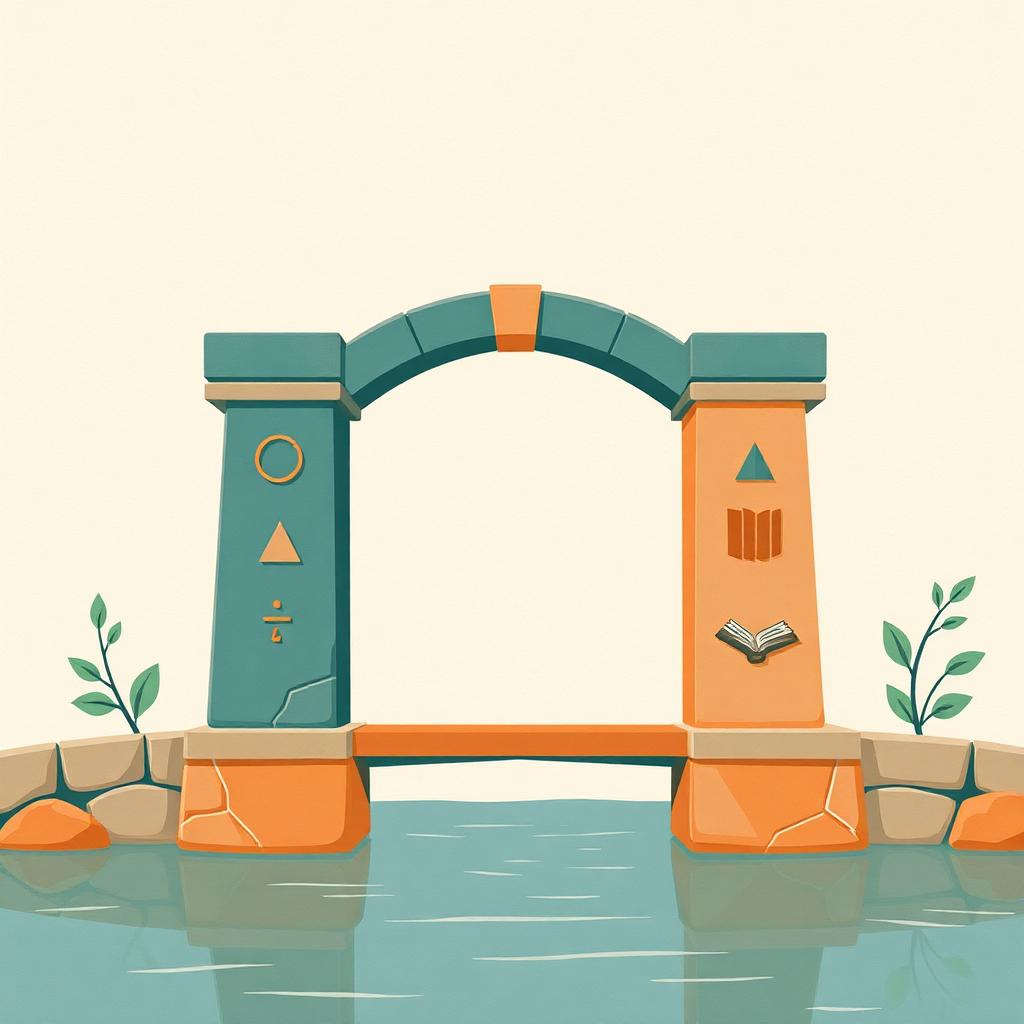
Turning a geometric series into a low-floor, high-ceiling inquiry task — a reflection on Pedagogical Content Knowledge (PCK) in action.
Last month, I published a post on social media about suggested inquiry prompts related to a geometric series. This article shares my thoughts and reflection on those prompts.
My Thoughts About This Geometric Series. As a math expert, I know that the geometric series ½ + ¼ + 1/8 + 1/16 + … converges to 1. However, I had never asked myself about its significance, meaning, or real-life representation. Additional questions came to mind: if the series is about adding fractions, what if we ask an upper elementary student to solve it? How can we simply represent this sum? What authentic situations use this series? How can we guide students to inquire about it? And why does it converge to 1?
Anticipating Student Thinking. If we ask students to find the sum of the first five terms, they may start by adding the fractions two by two. New questions will be raised about the pattern they notice. Since we always encourage students to represent or model their thinking, they might draw bars — or take one whole (a square, for example) and divide it repeatedly to see the given sum grow toward the whole.
Real-Life Contexts. After visualizing the sum, I looked for real-life situations to give the series meaning. Two suggested word problems: (1) Jad has a square garden. On the first day he waters half of it; each following day he waters half of the remaining dry area. What do you think about his strategy? How many days will it take him to fully water his garden? Show your work and explain your reasoning. (2) Wissam has a yearly salary and a savings plan: he saves half of his salary at the end of the year; then at the end of each month he saves half of what remains after subtracting his previous savings. What fraction or percentage will he have saved after the first month? The second? The third? A year?
After introducing representation, significance, and meaning, teachers can start with any prompt that suits their students' prior knowledge and ability levels — and guide them through an open, structured, or guided inquiry process.
Reflection. Following this process of thinking, the sum of a geometric series becomes a "low-floor, high-ceiling" task that all students, regardless of background and skills, can begin and work on at their level of engagement. This process requires teachers to have Pedagogical Content Knowledge (PCK) — knowing how to teach topics in ways learners can understand, addressing misconceptions, and delivering the subject matter effectively. PCK distinguishes teachers from non-teaching specialists and involves competencies such as conceptual approach, relational understanding, and adaptive reasoning. By using inquiry prompts and real-life situations, teachers help students develop a deeper understanding of math concepts and foster critical thinking and problem-solving skills.
In summary, whether you are a math expert or a teaching expert, you need to believe in building the bridge between Pedagogical Knowledge and Content Knowledge by asking why, what if, and so what. This thinking process is essential for creating effective learning experiences that meet the needs of students with different backgrounds and skill levels. With PCK, you can effectively deliver subject matter and help your students develop deep conceptual understanding, critical thinking, and problem-solving skills.
Keep reading
Math Beyond Memorization: The Power of Provocations
What if every math lesson began with a spark of curiosity instead of a formula? A merged reflection on what provocations are, why they matter, and the key elements that make them transformative.

The Invisible Work That Shapes How Children Learn Math
We often talk about improving math learning by adding strategies and worksheets. But research keeps pointing us back to something deeper — what teachers know, believe, and notice.
The Power of Visual Representations: Enhancing Mathematical Comprehension for Diverse Learners
Mathematics is often perceived as abstract and complex. Visual representations bridge that gap — making concepts accessible, meaningful, and inclusive for every learner.